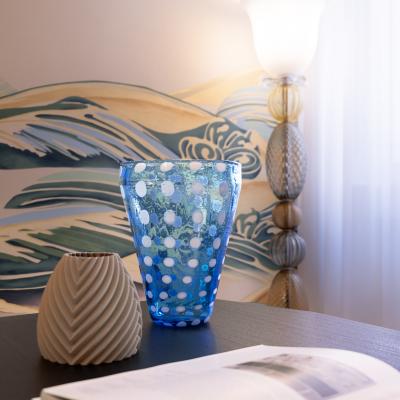
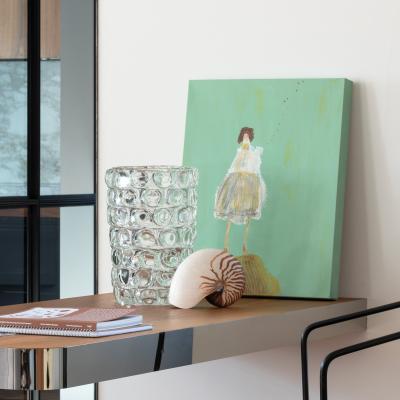
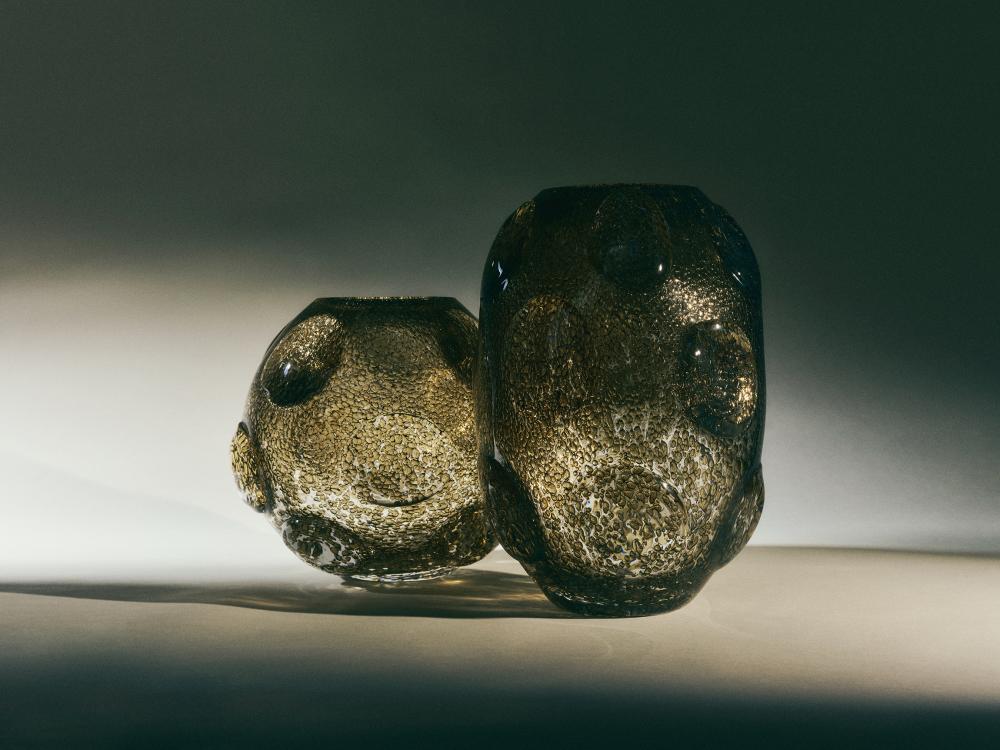
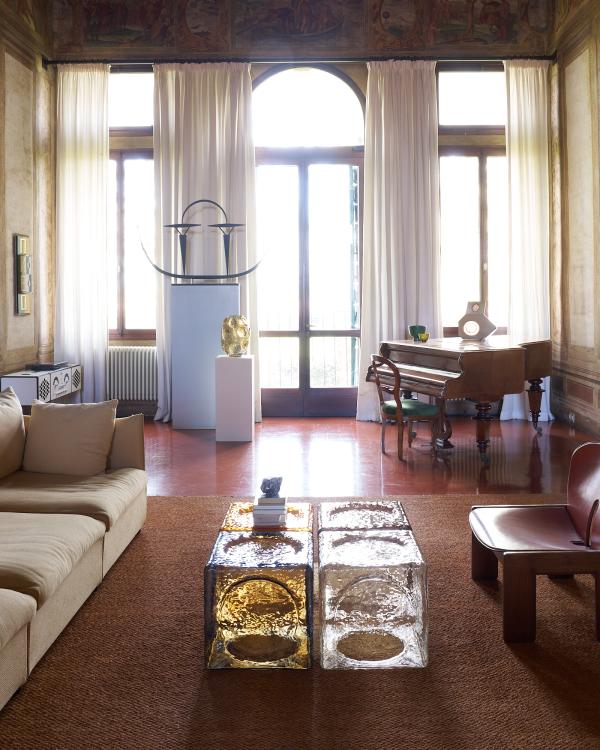
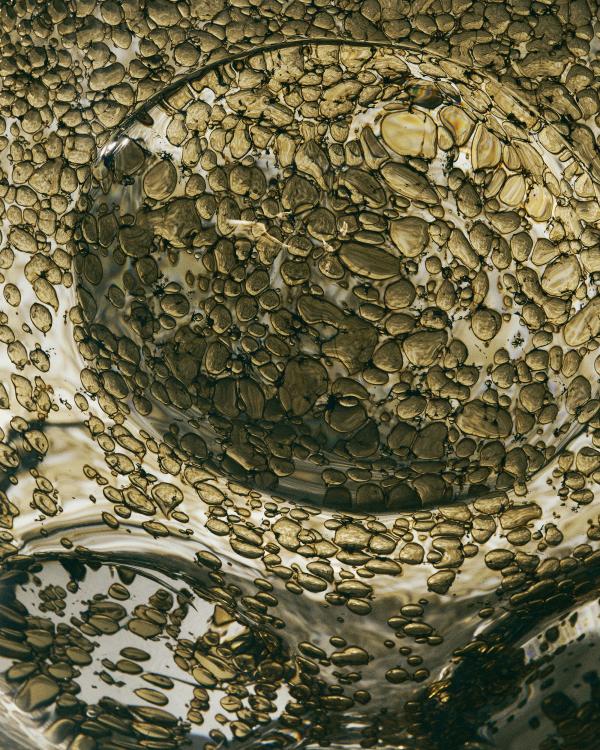
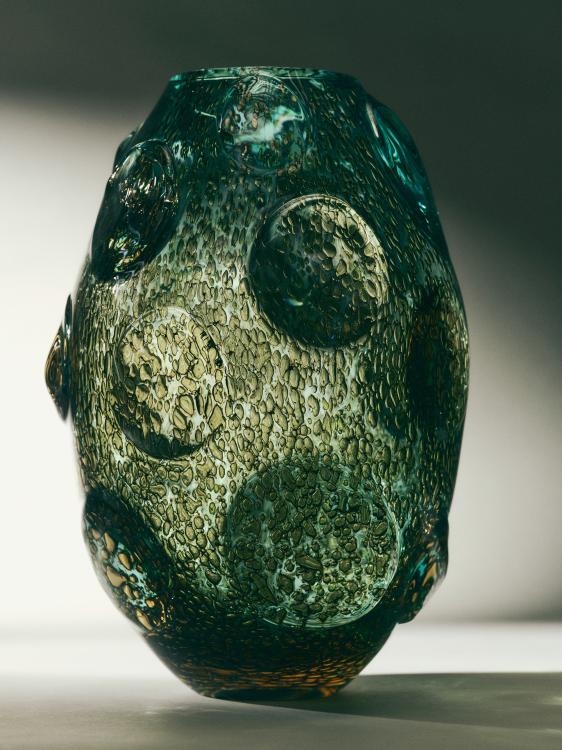
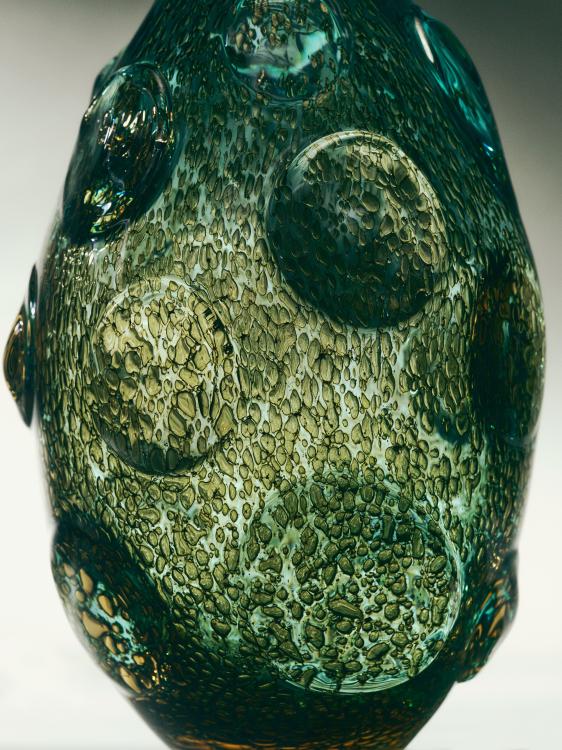
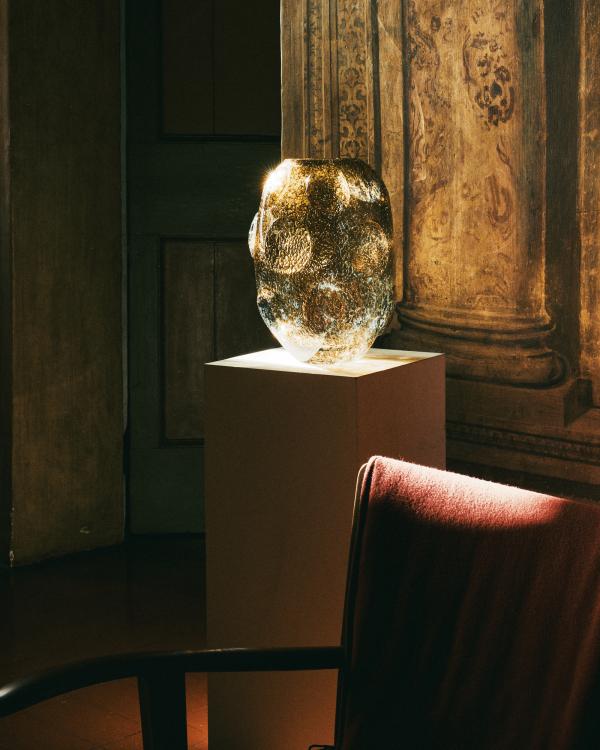
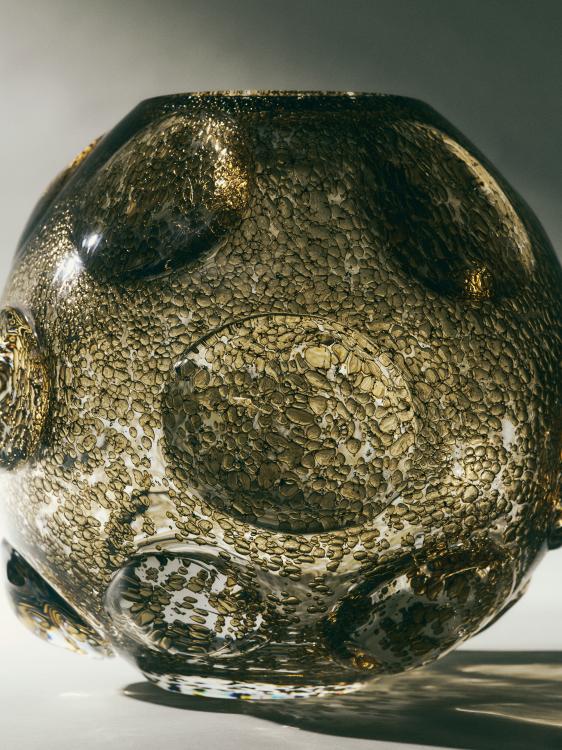
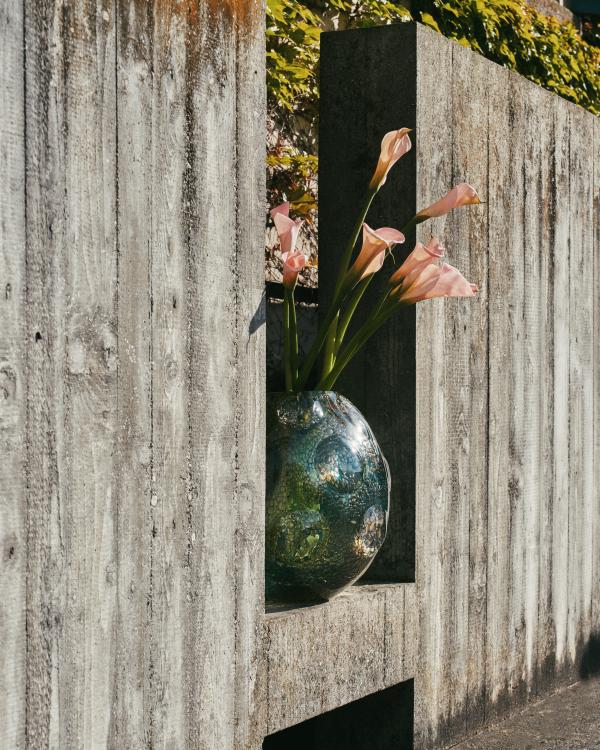
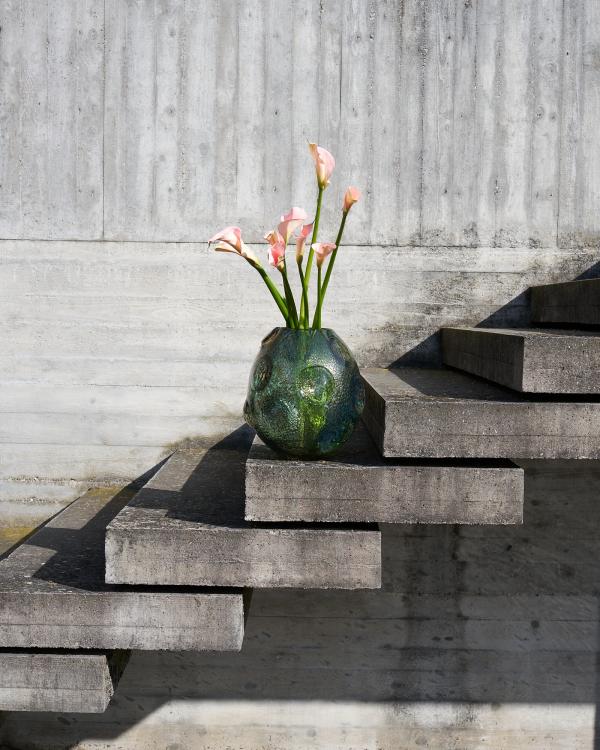
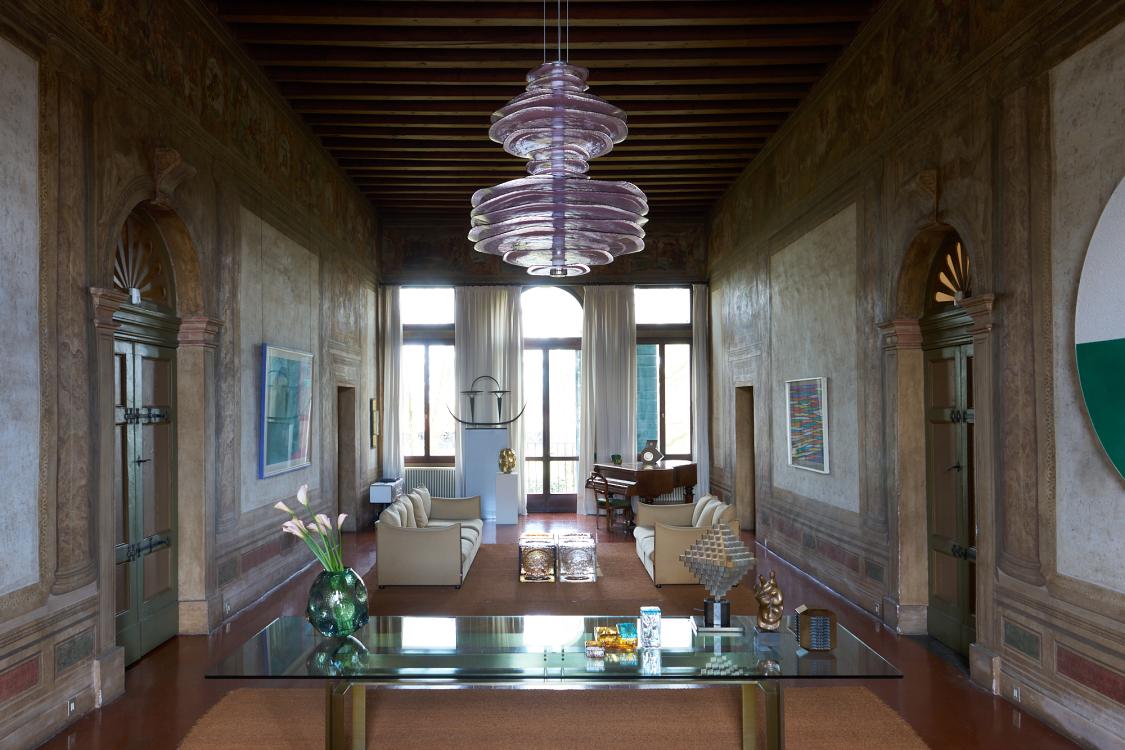
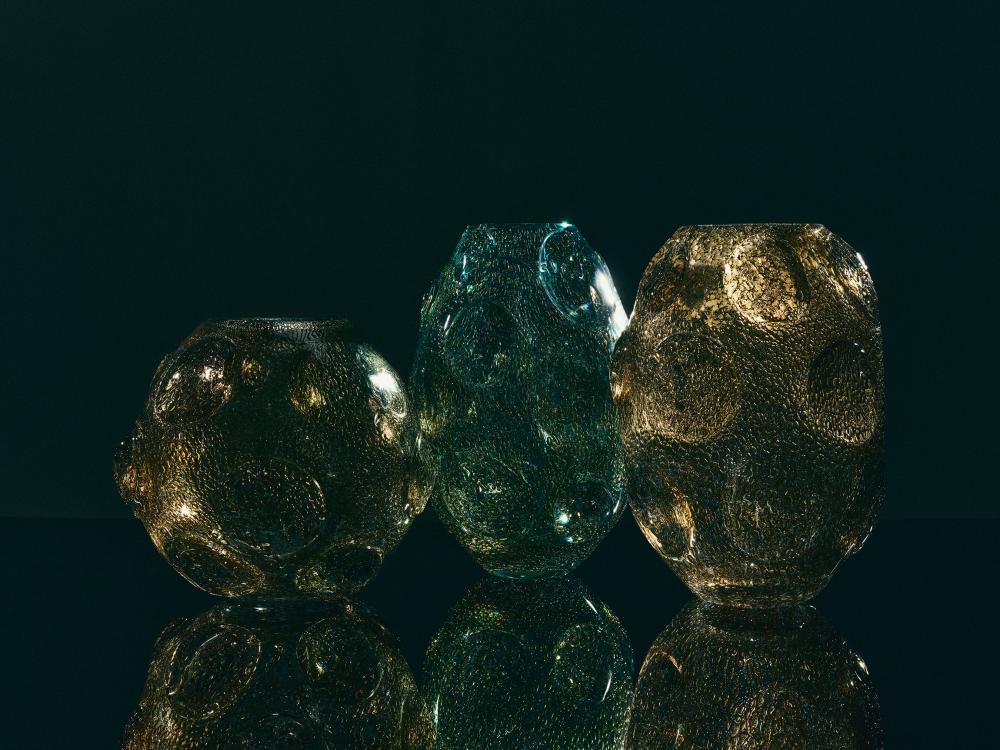
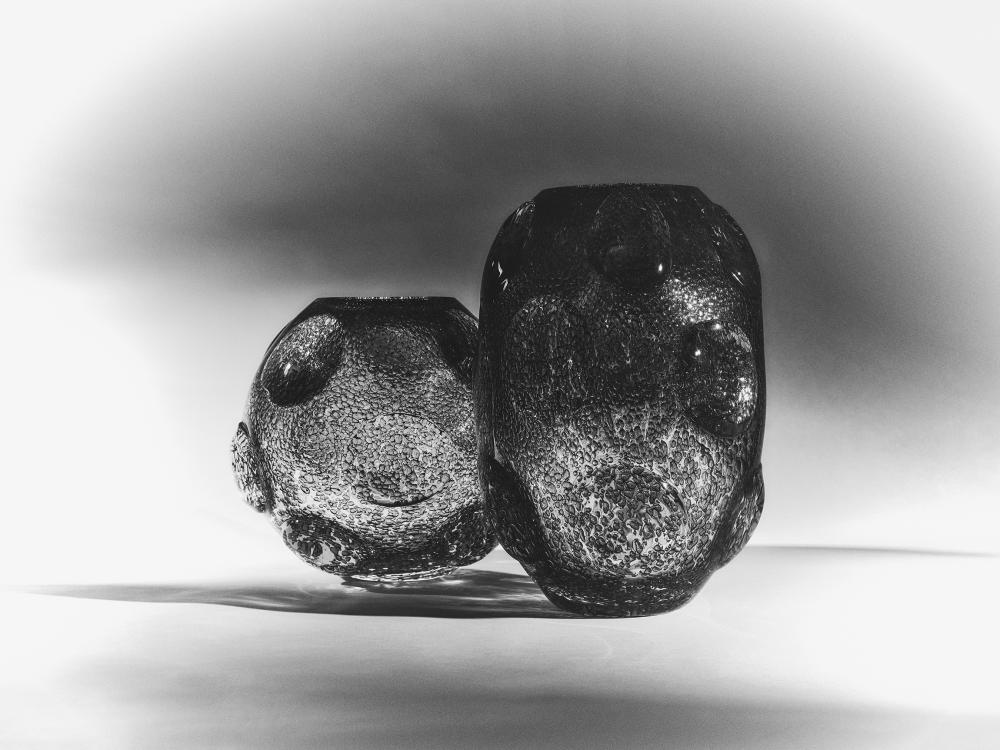
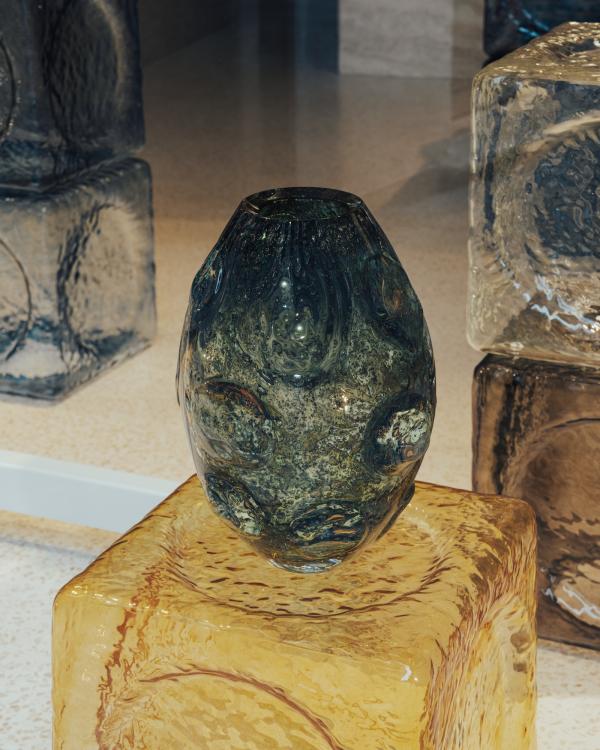
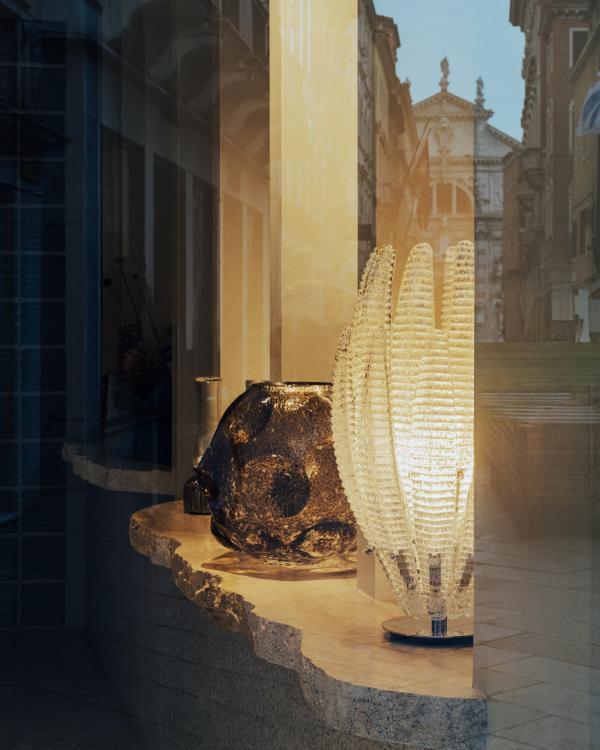
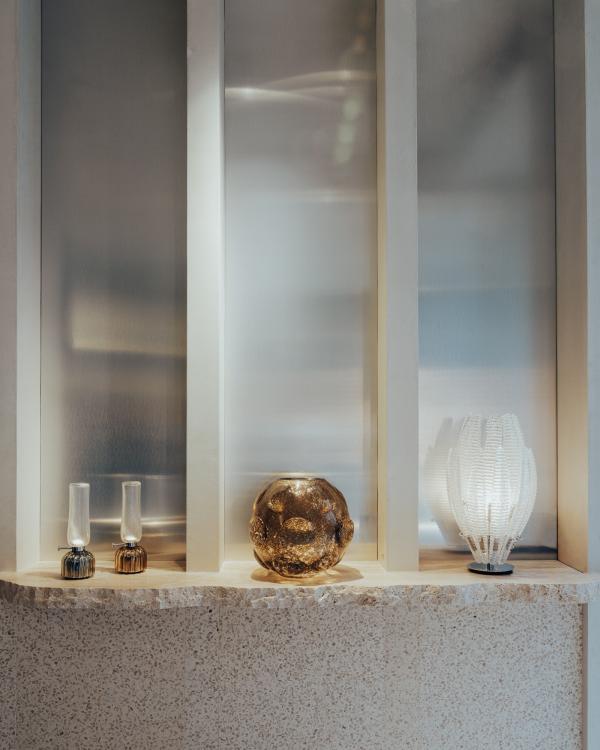
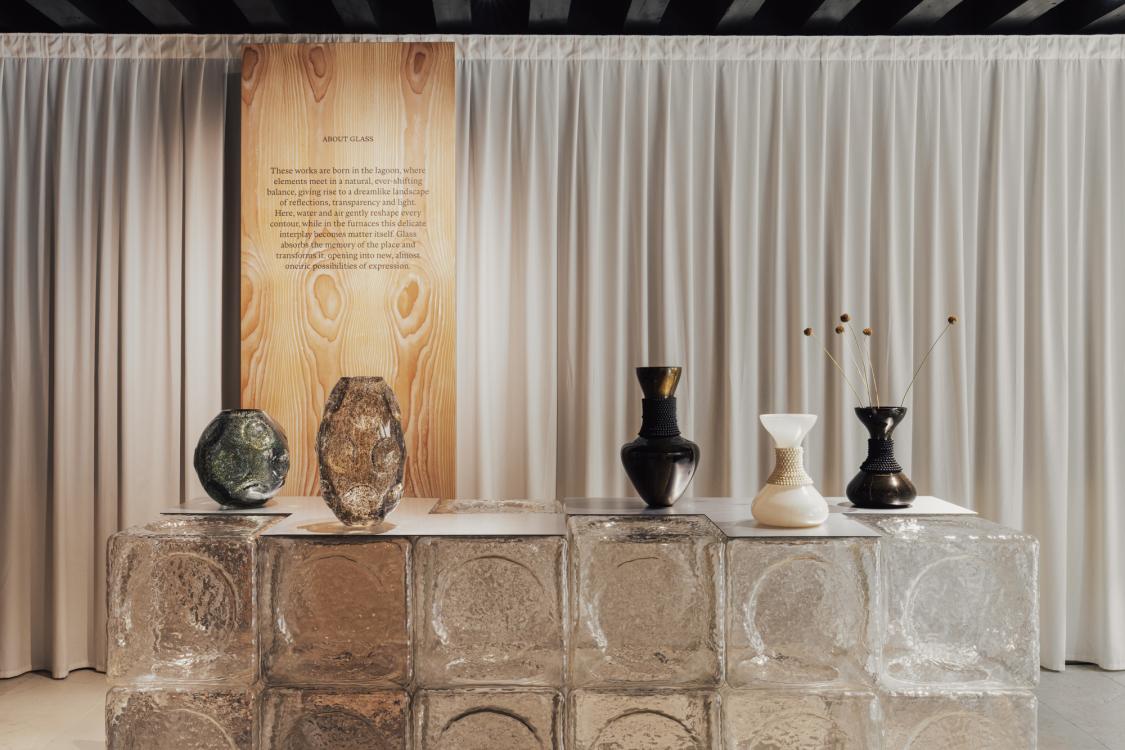
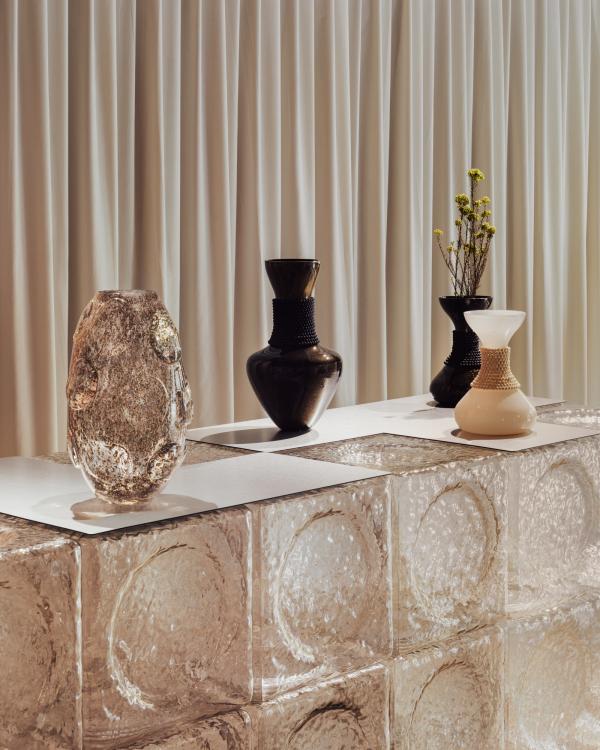
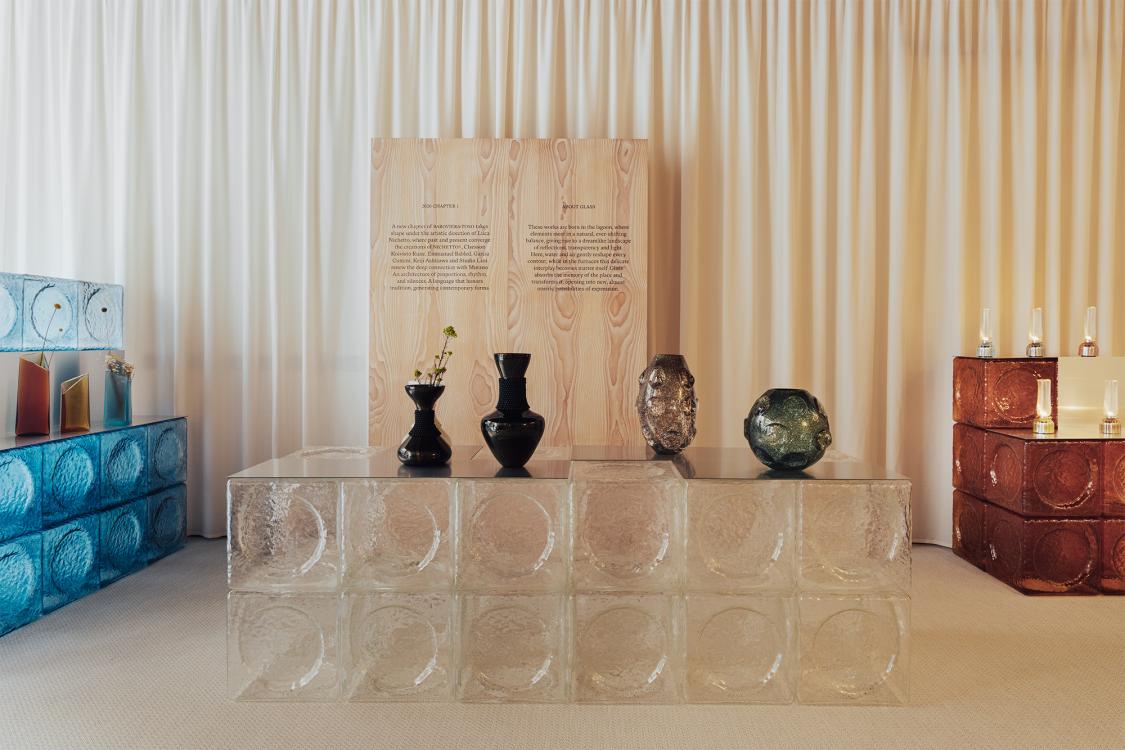
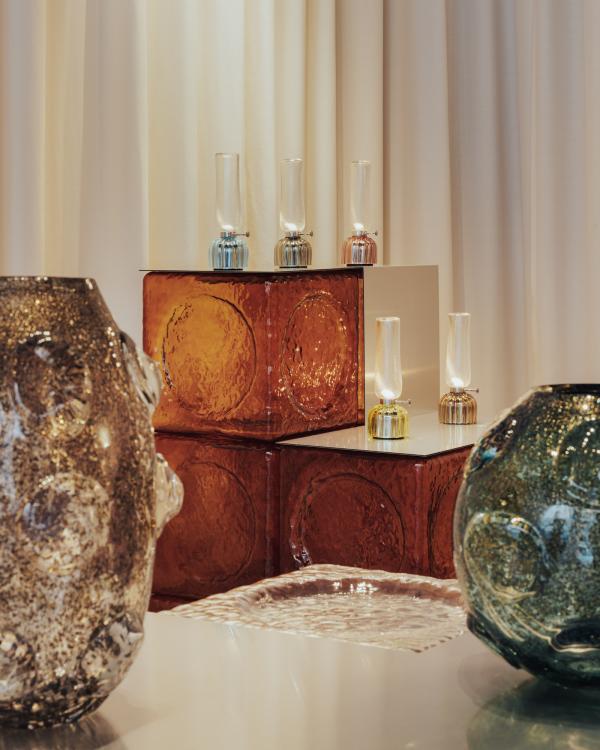
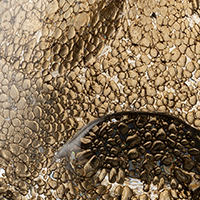
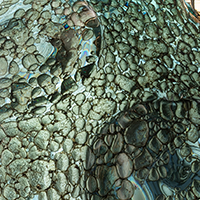
Lithos reimagines glass as a dense, stratified surface, transforming it into a compact, solid body crossed by inclusions and internal tensions — akin to a geological fragment. The collection offers a contemporary reinterpretation of Ercole Barovier’s pioneering research into the inclusion of materials within the molten glass mass. Inside the incandescent glass, a reactive mineral powder triggers a chemical transformation: bubbles and cavities form and remain trapped within the structure, coalescing into an irregular, profound skin. The glass thus acquires a stone-like character, evoking compressed and sedimented matter in which every variation becomes an integral part of the form and defines its identity. The surface emerges as a tactile landscape marked by craters and overlapping layers. Integrated optical lenses amplify the internal formations, revealing depth and visual complexity. Each piece is unique, shaped by the interplay of fire, chemical reaction, and precise control — striking a refined balance between material experimentation and formal clarity. In Lithos, matter itself becomes language.

Colors and finishings
Murano blownglass
-

JH
Crystal with submerged brass
-
JF
Crystal/aquamarine with submerged brass
Spec sheet


Emmanuel Babled
Emmanuel Babled was born in France in 1967. He studied Industrial Design at the Istituto Europeo di Design in Milan, where he graduated in 1989, and in 1992 he founded his own design studio. After many years of working in Italy, in 2010 he relocated his studio to Amsterdam, continuing to develop an international practice that moves seamlessly between design, craftsmanship, and material research. At the core of his design philosophy lies the belief that the most meaningful projects emerge from a direct engagement with the places where objects take shape. For Babled, observing materials and techniques within their authentic context, and immersing himself in the culture, knowledge, and human relationships that surround them, is an essential part of the creative process. Local craftsmanship and the human dimension of production thus become fundamental elements that contribute to defining the final outcome. For over twenty years, he has collaborated with the master glassmakers of Murano, developing a deep and lasting relationship with the island’s glassmaking tradition. Alongside glass, his research also extends to Carrara marble and to local artisanal practices across Europe and beyond. Babled goes beyond the celebration of tradition—he challenges it, combining historical craftsmanship with digital processes and experimental compositions to create objects that are rooted in heritage yet expressed through a distinctly contemporary language.
Ph credits: Laura Panno